


It’s happened to all of us: you’re singing confidently, and suddenly—crack! Your voice breaks, jumps, or fizzles out. It can be embarrassing, but it’s also totally normal, especially for singers at any stage. The good news? Voice cracks can be managed, minimized, and often completely avoided with the right techniques and care. Here’s how:
Understanding Voice Cracks
What are voice cracks? A voice crack happens when your vocal cords fail to vibrate smoothly together, creating a sudden break or jump in pitch. Cracks can sound squeaky, airy, or like a total vocal dropout.
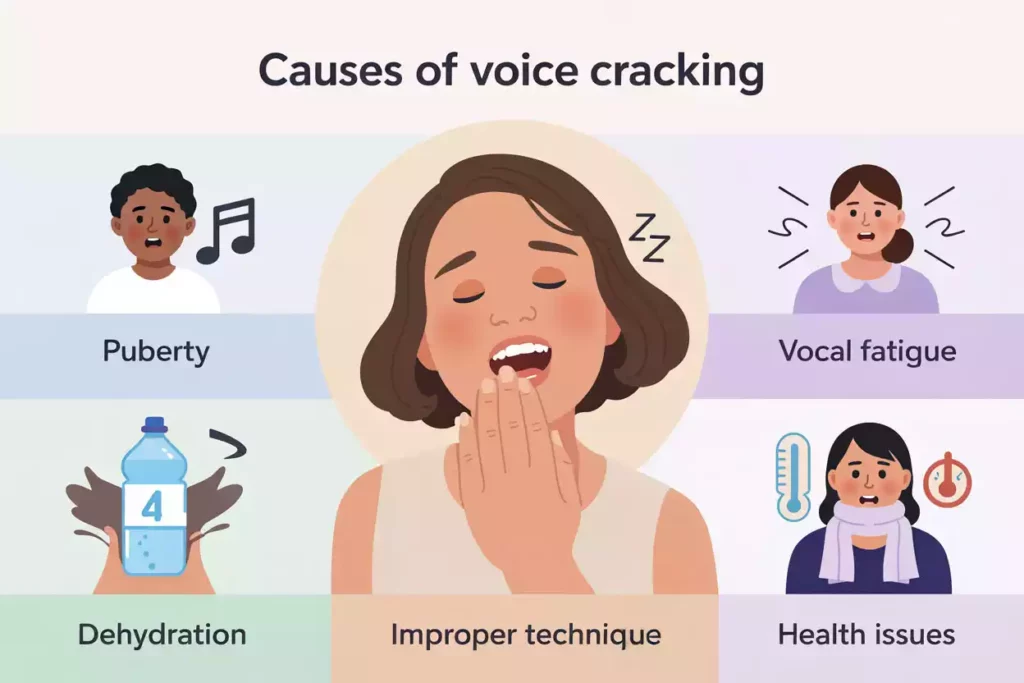
Why do they happen? Voice cracks have a few common causes:
- Puberty: Young, changing voices are naturally unstable because of rapidly growing vocal cords.
- Vocal fatigue: Over-singing or yelling can tire out your vocal cords, making them less responsive.
- Dehydration: Dry vocal cords can’t move as smoothly, which makes cracking more likely.
- Improper technique: Singing outside your comfortable range, lack of breath support, or tension in your throat.
- Health and allergies: Colds, allergies, or acid reflux can all affect vocal control.
Preventative Measures
The first step to stopping cracks is preventing them before they start!
1. Warm Up Every Time
Just like athletes stretch, singers need to warm up their voices. Gentle humming, lip trills, and sirens are great ways to get your vocal cords moving safely. Consistent warm-ups enhance vocal flexibility and reduce strain.
Find the right vocal warms ups for your voice here >
2. Hydrate, Hydrate, Hydrate
Aim for at least 6–8 glasses of water daily. Avoid caffeine and alcohol before big singing days—they dry out your vocal cords.
Learn more about what to drink before singing and explore the best drinks for your singing voice >
3. Embrace Healthy Habits
A balanced diet, regular exercise, and plenty of sleep keep your whole body (and your voice!) in top shape.
4. Don’t Push Too Hard
If you feel tired or hoarse, give your voice a break. Don’t force high notes or volume—use a microphone instead of shouting. Rest is your friend!
Developing Proper Singing Techniques
1. Breath Control
Good singing starts with the breath. Practice diaphragmatic breathing—let your belly, not your chest, expand. This steady airflow supports your sound and stabilizes your voice.
Try this:
- Place your hand on your stomach. Breathe in and watch it rise.
- Exhale slowly on a “sss” sound, keeping your shoulders relaxed.
- Build up to singing short scales, focusing on smooth, supported notes.
2. Posture & Alignment
Stand tall with relaxed shoulders and feet hip-width apart. Good posture lets your breath flow freely—and helps keep your voice from cracking.
3. Smart Vocal Exercises
Do gentle scales, lip trills, or sirens up and down your range. Keep to a comfortable pitch and volume to strengthen your voice step by step.
Explore more Vocal Technique >
Managing Performance Anxiety
Sometimes, nerves are the culprit! Performance anxiety creates tension, which can lead to cracks. Don’t let your nerves get the best of you, learn strategies for coping with stage fright.
Tame your nerves:
- Try slow, deep breaths before you sing.
- Visualize a confident performance.
- Practice singing for one friend (or even your pet) to build your comfort gradually.
Confidence grows with repetition, so be patient with yourself! Recognize that anxiety can cause physical tension, affecting vocal performance.
When to Seek Professional Help
Most cracks resolve with technique and care, but sometimes you need extra support:
- If you’re always hoarse or losing your voice
- If cracks don’t improve after rest and training
- If you feel pain when singing or speaking
Reach out to a vocal coach, speech therapist, or an ENT doctor for a personalized plan. They can identify issues like nodules, polyps, allergies, or acid reflux.
Ready to Take Your Singing to the Next Level?
Remember, every great singer has faced challenges like voice cracks—what sets you apart is your willingness to learn and grow! Keep practicing, stay curious, and be kind to your voice. If you found these tips helpful, explore more of our resources to keep building your skills and confidence:Keep Moving Forward—You’ve Got This!
Every singer faces hurdles—what matters is the determination to grow. If you’re ready to conquer voice cracks for good, don’t stop here! Explore these handpicked guides to build lasting strength, technique, and confidence:
- Proper Singing Technique — Build a solid foundation for a healthy, resilient voice.
- How to Practice Singing at Home — Simple at-home routines to lock in great habits and steady vocals.
- Improve Your Vocal Technique & Sing Better — Next-level tips to refine your voice and boost your control.
- Passaggio Playbook: Mastering register transitions when singing — Expert-level advise for singers of any skill level.
Stay inspired—your best voice is waiting. Keep singing, keep learning, and celebrate every improvement along the way!
Cracking is a normal part of the singing journey—even pros experience it! With mindful technique, self-care, and a little patience, your voice will grow stronger and more reliable every day.
Keep singing, keep smiling—and remember, every great singer has been there!