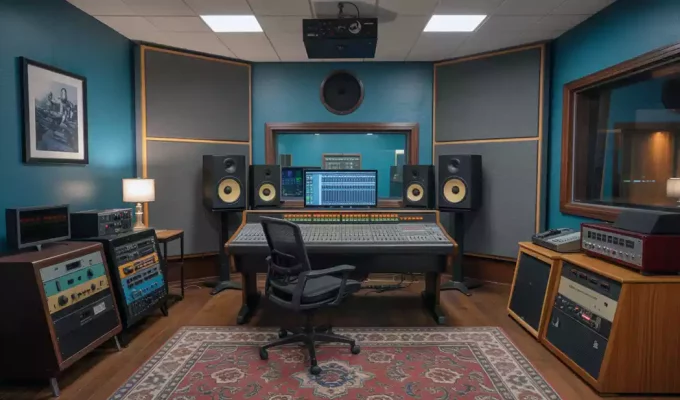


Think of your living room, bedroom, or dorm as more than four walls—it can be the most convenient, cost-free studio you’ll ever step into. With the right strategy, you can practice singing at home and make measurable progress between lessons, auditions, or choir rehearsals.
This guide distills research-based vocal pedagogy and the coaching experience across hundreds of students into everyday language, so you’ll know exactly what to do, why it works, and how to track the difference in your sound.
Inside you’ll find:
- Quick warm-ups that protect and prepare your vocal folds
- Breath, support, and resonance drills you can finish in under 10 minutes
- Goal-oriented practice templates that replace guesswork with clear outcomes
- Tech tips—from free tuner apps to simple phone recording—for instant feedback
- Vocal-health reminders to keep your instrument strong for the long run
Whether you’re a total beginner or a seasoned singer polishing high notes, use this roadmap to turn consistent home practice into your secret advantage. Open the door, stand tall, and let’s start singing smarter—right where you are.
Prepare Your Space for Singing at Home
- Find a small room with minimal echo (bedroom, walk-in closet, or corner with curtains/carpet).
- Stand where you can see yourself from the waist up in a mirror or the selfie-camera of a phone/tablet.
- Keep a chair or stool nearby for seated work, a water bottle, pencils, score sheets, and a device that can play tracks and record.
- Post a printed weekly practice plan at eye level; ticking off each task provides a tiny dopamine hit that reinforces the habit.
Simple At Home Warm Up Habits
Your voice is living tissue, not a plug-and-play gadget. Every practice plan works better—and lasts longer—when you treat the whole instrument with care. Adopt these science-backed habits to keep your sound clear, resilient, and ready on demand:
Pro Tips for Warming Up at Home
- Log your warm-up duration and sensations; patterns will reveal your optimal routine length.
- Keep the first sung notes at 70 % of your maximum volume; save forte work for later in the session.
- If mornings feel raspy, add two extra hydration sips and repeat the SOVT step.

Daily Healthy-Singer Checklist
□ Drank at least 8 oz water before first note
□ Completed 3-minute body stretch/reset
□ Warm-up stayed under mezzo-piano until voice felt loose
□ Practiced “quiet voice” or silence for 10 minutes per hour of heavy use
□ Logged any unusual fatigue or discomfort for teacher review
Discover some of the best voice warm up exercises for singers →
Use “Deliberate Practice” Blocks
Research in motor learning shows that 15–25-minute focused blocks with short breaks (Pomodoro style) produce better retention than one long slog. Example 45-minute session:
- Block 1 (20 min) Technical exercises that address 1–2 clear goals (e.g., breath pacing in long phrases).
- 5-minute rest (hydrate, stretch, review notes).
- Block 2 (20 min) Repertoire problem spots, then a full run-through at 80 % tempo.
- Cool-down (3-5 min) Gentle humming or descending lip trills.
Set Micro-Goals for Yourself
Vague goal: “Improve my high notes.”
Micro-goal: “Today I will sing the A4 in measure 34 three times with balanced onset and release, at mp, without jaw tension.”
Track goals in a practice journal or an app like Modacity, Musician’s Practice Planner, or even a shared Google Sheet with your teacher or coach.
Micro‑goal idea: sing and memorize four lines of an Italian lyric—singing has documented benefits for language vocabulary retention.
Record (at home), Review, Reflect (The 3 R’s)
- Record a 20-second excerpt.
- Listen/watch immediately while score-marking what worked (✔) and what didn’t (?).
- Adjust one variable (vowel shape, breath count, posture) and try again. This rapid feedback loop mimics having a teacher in the room and accelerates error correction.
- Add “Silent” Practice
- Lyric declamation as rhythmic speech on pitch names or sol-fege.
- Mental imagery: See and hear yourself singing the phrase effortlessly; athletes and musicians show gains from vivid, multisensory rehearsal.
- Score study with a pencil: mark breaths, dynamics, diction, and form.
Maintain Vocal Health
- Hydrate: 2–3 liters water daily; hydration affects the mucosal wave, what you drink impacts your singing voice.
- Sleep: 7–9 hours; vocal fold tissue repairs during deep sleep.
- Avoid loud speaking or whispering for extended periods; both can cause hyperfunction.
- 60-second “voice rest reset” after every intense 5–10 minute burst of belting or high classical singing.
- Soothe your throat with a singer’s tea you can make at home anytime.
Use Technology Wisely at Home
- Apps: Voice type apps, Tunable or Piano Companion for pitch; AnyTune or Anytimelooper for slowed-down accompaniment; VoCo-VoxTrainer for semi-occluded exercises.
- Smart speaker or Bluetooth pedal to start/stop tracks hands-free.
- Decibel-meter app to ensure you’re not constantly above 85 dB SPL.
- Did you know its easy to find your vocal range at home? Tools like the Vocal Range Test Pro make it easy to understand your vocal type and begin training your voice at home.
Motivation & Mindset Hacks
- Environment-design: Leave the mic stand or straw out as a visual cue.
- Habit stacking: “After I brush my teeth at 7 pm, I sing 10 minutes of exercises.”
- Gamify: Award yourself points for consecutive practice days and redeem them for a treat or new sheet music.
- Growth mindset: Replace “I can’t hit that note” with “I haven’t mastered that note yet.”
Next-Level Resources
Feeling inspired to push your progress even further? Ready to uncover the trade-secrets that top singers use on stage and in the studio. You’ll learn:
- The “Silent Breath Reset” that keeps pitch locked in during long phrases.
- A resonance-tuning trick for instant volume without extra effort.
- The mindset shift that turns stage nerves into laser-focused energy.
Read the full breakdown here → 3 Secret Tips for Singing from a Pro Vocal Coach
Work those three secrets into the daily practice plan you’ve just built, and watch today’s warm-ups transform into tomorrow’s breakthrough performances.
Know When to Stop
Warning signs that signal a break or end of session:
- Persistent throat tickle, dryness that water doesn’t relieve.
- Loss of top or bottom notes.
- Sudden breathiness or pressed phonation.
Over-singing can undo a week of good work; muscles learn best on the edge of ability, not beyond it.
Sample Weekly Practice Template
Mon / Wed / Fri – 45 min each
- Warm-up (10)
- Technical focus (20)
- Repertoire segments (15)
Tue – 30 min (light)
- Warm-up (8)
- Slow-motion phrasing + silent score study (22)
Thu
- Rest/Listening day (analyze recordings of pros)
Sat
- 1 hr run-through or mock performance with video
Sun
- Complete rest
Remember: consistency beats intensity. Five well-planned, low-stress sessions will grow your voice more than a single marathon rehearsal. Celebrate small wins, keep an organized log, and let curiosity (not perfectionism) drive each practice. Happy singing!
Turn Today’s Practice Into Consistent Progress
Choose your next step…
Self‑guided (free)
Read next:
- Vocal Warmups & Exercises for Singers
- Easy Vocal Exercises for Singers
- The Science of a Unique Voice: Making Your Voice Stand Out
Coach‑guided (personalized)
Find a vocal coach near you or explore private 1:1 online virtual voice lessons with the best vocal coaches and singing instructors around the globe.