


Are you looking to join a choir or maybe you’re just looking to make the most out of your experience in choir, this resource is just for you!
Choosing to sing in a choir is an enjoyable and rewarding experience, but it’s important to remember that singing in a choir requires discipline and dedication.
5 Tips for Singing in a Choir
Singing in a choir is one of the most rewarding experiences for singers of all ages and abilities. Whether it’s singing classical or popular music, choral singing can provide singers with an opportunity to learn teamwork and musical theory while improving their vocal technique.
Here are our top five tips for singing in a choir:
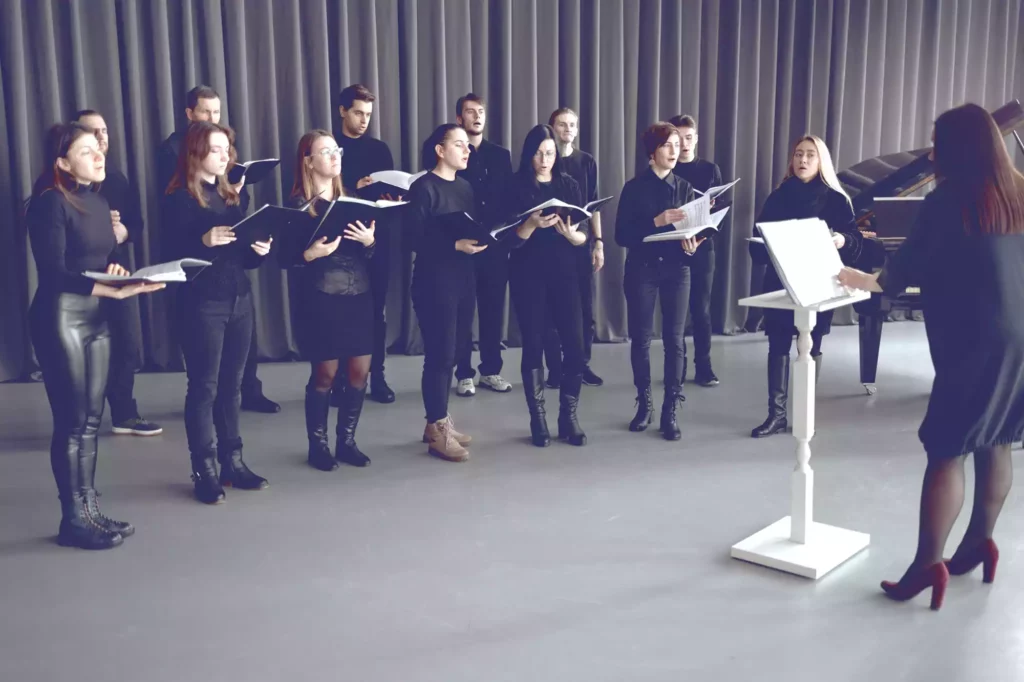
Don’t forget voice warm-ups!
Warm up your voice before rehearsals and performances. Vocal warm-ups are essential for choir members to help keep their voices healthy and in shape. A few minutes of light exercises can do wonders for both vocal health, range, and sound quality. What singers do before they perform can make a huge difference in their performance, even what a singer drinks before a performance is important!
Choir singing often challenges singers to explore different parts of their voice’s vocal range. Regular practice and exercises can safely expand your range and improve flexibility.
Explore some of our favorite vocal warm up exercises you can try at home, perfect for singing in choir or solo.
Listen carefully to the conductor
It is important that each choir member pays attention during rehearsals so they are able to learn the music quickly and accurately without having to look at their sheet music during a performance or rehearsal setting. Engaged choir members, who are paying attention, will be able to better understand the conductor’s instructions, enabling them to be more expressive with their performance.
Blend with the other singers
It’s important that all choir members sing as one unified voice instead of individual voices competing against each other when singing together in harmony or unison sections within a piece of choral repertoire; this means listening intently when others around you are singing so you can blend accordingly with them on pitch and volume.
Blending, on a higher level, can be about singers awareness of the “vowel shapes” and “phrasing” that is needed to match those around you, so everyone can be heard clearly as one unified choir. When the repertoire is in Latin, Italian, or German, singing those lines can also sharpen your pronunciation. This will help create a cohesive sound while avoiding clashing between choir singers.
Practice singing regularly
Regular practice outside of rehearsals will help choir members learn their parts more quickly, as well as understand the musical material better, so they can perform with confidence during a performance or rehearsal setting.
Singing and practicing to sing at home can be easy and a safe space for many. If not, look for a safe space for you to practice and sing, maybe in the car, or your favorite elevator or stairway.
Enjoy yourself & have fun
Singing in a choir should be an enjoyable experience for all involved; keep it light and remember to have some fun while you’re at it! Research studies have shown the benefits of singing in choir and choral participation measurably boosts emotional well-being, strengthens social bonds and nurtures self-discipline in singers of every age.
Commitment to Your Choir
Consistent attendance and preparation demonstrate respect for your fellow singers and are essential for a cohesive choir performance. Practice your parts outside of rehearsal to ensure you can contribute confidently.
Seek constructive feedback from conductors and peers, and use it to guide your personal growth. Reflect on each rehearsal and performance, identifying areas for improvement and celebrating your achievements.
We’re excited to support your journey as a singer
Embrace this opportunity to grow and contribute to something greater than yourself, creating beautiful music with like-minded individuals. By singing with your authentic voice and practicing these tips from choral experts, you can enjoy yourself and build community, make friends, and grow as a singer.
Singing in a choir can be an incredibly rewarding and fulfilling experience. Whether you’re singing classical or contemporary music, choral singing is an opportunity to practice teamwork, develop musical theory knowledge and refine your vocal technique all at the same time.

Essential Choir Etiquette & How to Prepare for Your First Choir Rehearsal
Joining a choir for the first time can be exciting, but knowing what to expect can help you make a great first impression. Here’s how to start off on the right note:
Choir Etiquette 101
Arrive on Time:
Punctuality shows respect for your conductor and fellow singers. Arrive a few minutes early to settle in and review your music.
Come Prepared:
Bring your music folder, a pencil for marking your score, and a water bottle. Review your parts, if possible, before rehearsal.
Listen Carefully:
Pay close attention to the conductor’s directions—even during warm-ups or when others are singing.
Limit Talking:
Keep chatter to a minimum during rehearsal. Save socializing for breaks to help maintain focus and productivity.
Respect Everyone:
Encourage your fellow choir members and be gracious to new singers. Choirs thrive on teamwork and mutual support.
Mark Your Music—Neatly:
Use a pencil to make notes, and avoid excessive markings that might make your sheet music hard to read for others.
How to Prepare for Your First Choir Rehearsal
Warm Up Your Voice:
Arrive with your voice warmed up, or join in eagerly during group warm-ups to get ready to sing.
Dress Comfortably:
Wear comfortable attire suitable for standing and singing (ask if there’s a dress code).
Introduce Yourself:
Say hello to your section leader and fellow singers. Making connections early will help you feel welcome.
Be Open to Learning:
Don’t worry if you’re not perfect—most choirs welcome all abilities. Ask questions if you’re unsure about anything.
Bring a Positive Attitude:
Come ready to listen, learn, and enjoy the experience!
With a little preparation and the right etiquette, you’ll feel confident and ready to make the most of your choir journey. Happy singing!